Introduction
Dans un contexte professionnel et personnel où la gestion efficace du temps et des tâches est cruciale, mesurer la productivité devient un enjeu central. Les approches traditionnelles restent souvent subjectives ou approximatives. C’est ici que le Quantified Self offre une méthode rigoureuse et data-driven pour analyser ses performances.
Contexte / Problème
La productivité se définit généralement par la quantité ou la qualité du travail accompli dans un intervalle donné. Cependant, mesurer cette notion de façon objective est complexe : les interruptions, la fatigue, la motivation fluctuante, et les variations de contexte rendent difficile une évaluation fiable. Beaucoup se fient à des impressions ou à des évaluations ponctuelles, ce qui limite la compréhension fine des facteurs influents.
Ce qui peut être mesuré ou suivi
Pour une analyse quantitative de la productivité, plusieurs indicateurs peuvent être collectés :
- Durée et fréquence des sessions de travail : temps actif sur tâches ciblées, heures de concentration maximale.
- Nombre et type de tâches accomplies : suivi des objectifs, complétions, priorités.
- Interruptions et pauses : nombre, durée et impact sur la continuité du travail.
- Métriques physiologiques : rythme cardiaque, qualité de sommeil, niveau d’énergie, qui influent sur la performance.
- Données comportementales numériques : utilisation des applications, vitesse de frappe, mouvements de souris.
Perspective Quantified Self
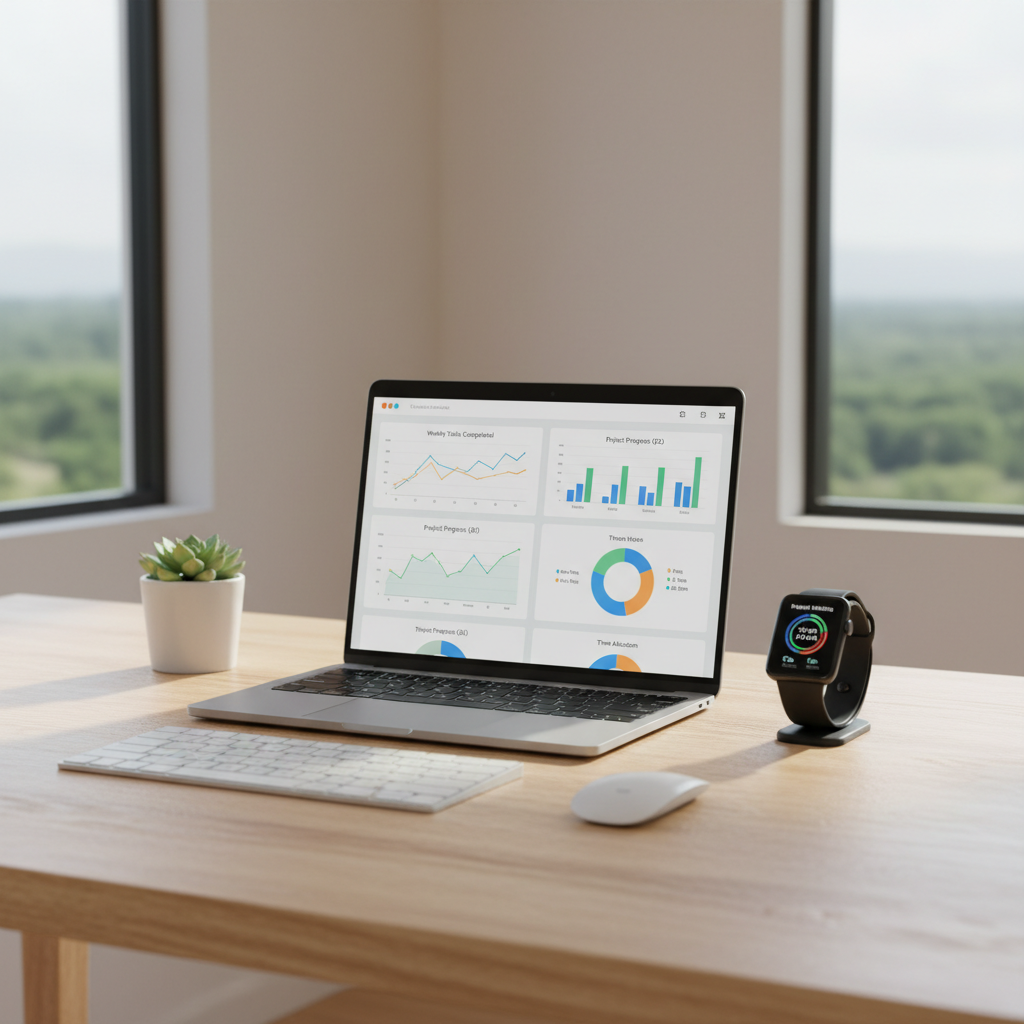
Le Quantified Self propose une collecte systématique et continue de ces données via des outils digitaux (applications, montres connectées, logiciels de gestion). Cette approche permet de construire des tableaux de bord personnalisés, d’identifier des patterns récurrents, et de tester des hypothèses sur les conditions optimales de productivité. Elle encourage une démarche d’auto-expérimentation pour ajuster les habitudes et maximiser les résultats.
Conclusion
Mesurer la productivité avec des méthodes Quantified Self offre une vision précise et actionnable, loin des approximations classiques. En intégrant des métriques objectives et en adoptant une posture analytique, il devient possible d’optimiser ses routines de travail de manière personnalisée et durable. La prochaine étape consiste à choisir les bons outils de suivi et à structurer ses données pour une interprétation efficace.