Introduction
Dans un monde où les exigences professionnelles et personnelles se multiplient, optimiser sa productivité est devenu un enjeu majeur. Le suivi des données personnelles, ou Quantified Self, permet d’objectiver ses habitudes et d’identifier des leviers d’amélioration concrets. Cette approche centrée sur les métriques ouvre une voie pragmatique pour mieux gérer son temps et ses ressources.
Contexte / Problème
Beaucoup de personnes peinent à comprendre pourquoi certaines journées sont plus productives que d’autres. Le manque de visibilité sur les comportements, l’énergie disponible et les interruptions empêche souvent d’agir efficacement. Sans données fiables, les tentatives d’optimisation reposent sur des impressions subjectives, peu fiables et difficiles à ajuster.
Ce qui peut être mesuré ou suivi
Pour une analyse fine de la productivité, plusieurs indicateurs peuvent être collectés :
- Durée et qualité du sommeil : impact direct sur la concentration et l’énergie.
- Temps passé sur les tâches clés : mesure des efforts réels dédiés.
- Nombre et durée des interruptions : facteur de fragmentation de l’attention.
- Fréquence des pauses : influence sur la récupération cognitive.
- Niveau de stress mesuré par la variabilité cardiaque : indicateur physiologique de la charge mentale.
- Heures de travail effectives vs heures planifiées : écart révélateur de la gestion du temps.
- Utilisation des outils numériques : analyse des applications et sites visités pour identifier les distractions.
Perspective Quantified Self
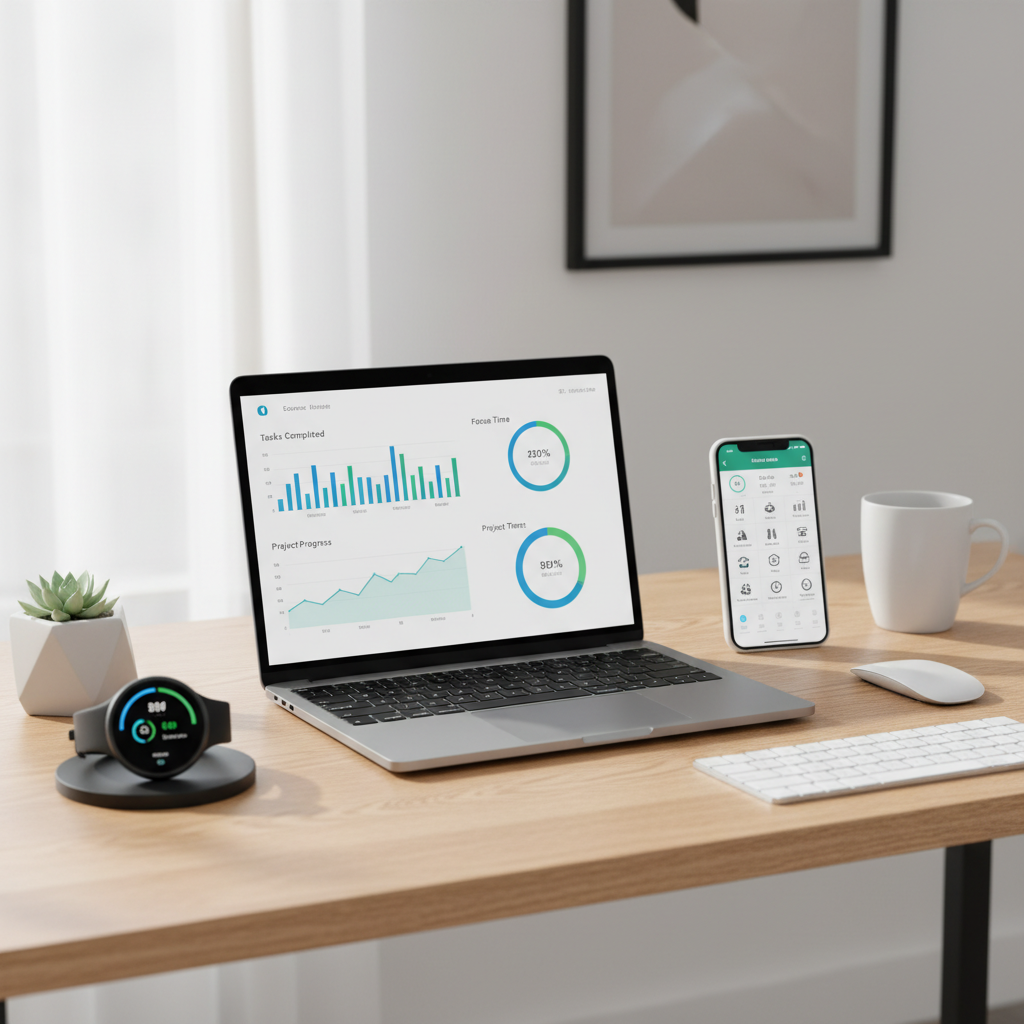
En adoptant une démarche Quantified Self, l’individu se place au centre de son analyse. Les données collectées via des trackers, applications ou journaux numériques permettent de construire un tableau de bord personnalisé. Ce dernier offre une visualisation claire des tendances et anomalies, facilitant des ajustements précis. L’objectif n’est pas la surveillance constante, mais l’exploration méthodique des données pour soutenir des décisions éclairées et durables.
Conclusion
Le suivi des métriques personnelles liées à la productivité constitue une méthode fiable pour comprendre et améliorer ses performances. En combinant données physiologiques, comportementales et temporelles, il devient possible d’identifier des patterns et d’agir sur les leviers les plus pertinents. Pour commencer, il suffit d’adopter des outils simples de suivi et de construire progressivement un système d’analyse adapté à ses besoins spécifiques.