Introduction
In an era where optimizing personal performance is increasingly valued, understanding daily productivity through measurable data is essential. Tracking productivity metrics allows individuals to pinpoint inefficiencies and enhance work habits with precision.
Context / Problem
Many professionals struggle to objectively assess their productivity, often relying on subjective impressions or end-of-day reflections. This lack of quantifiable data can lead to misjudgments about time management, task prioritization, and overall efficiency.
What Can Be Measured or Tracked
Key metrics relevant to daily productivity include:
- Time Spent on Tasks: Duration dedicated to specific activities, categorized by type or project.
- Task Completion Rate: Number of tasks finished within a set timeframe relative to planned tasks.
- Focus Intervals: Periods of uninterrupted work, often tracked via techniques like Pomodoro timers.
- Distraction Frequency: Instances of task switching or interruptions.
- Energy Levels: Subjective or biometric data capturing alertness or fatigue throughout the day.
- Break Patterns: Timing and length of breaks to assess recovery and prevent burnout.
Quantified Self Perspective
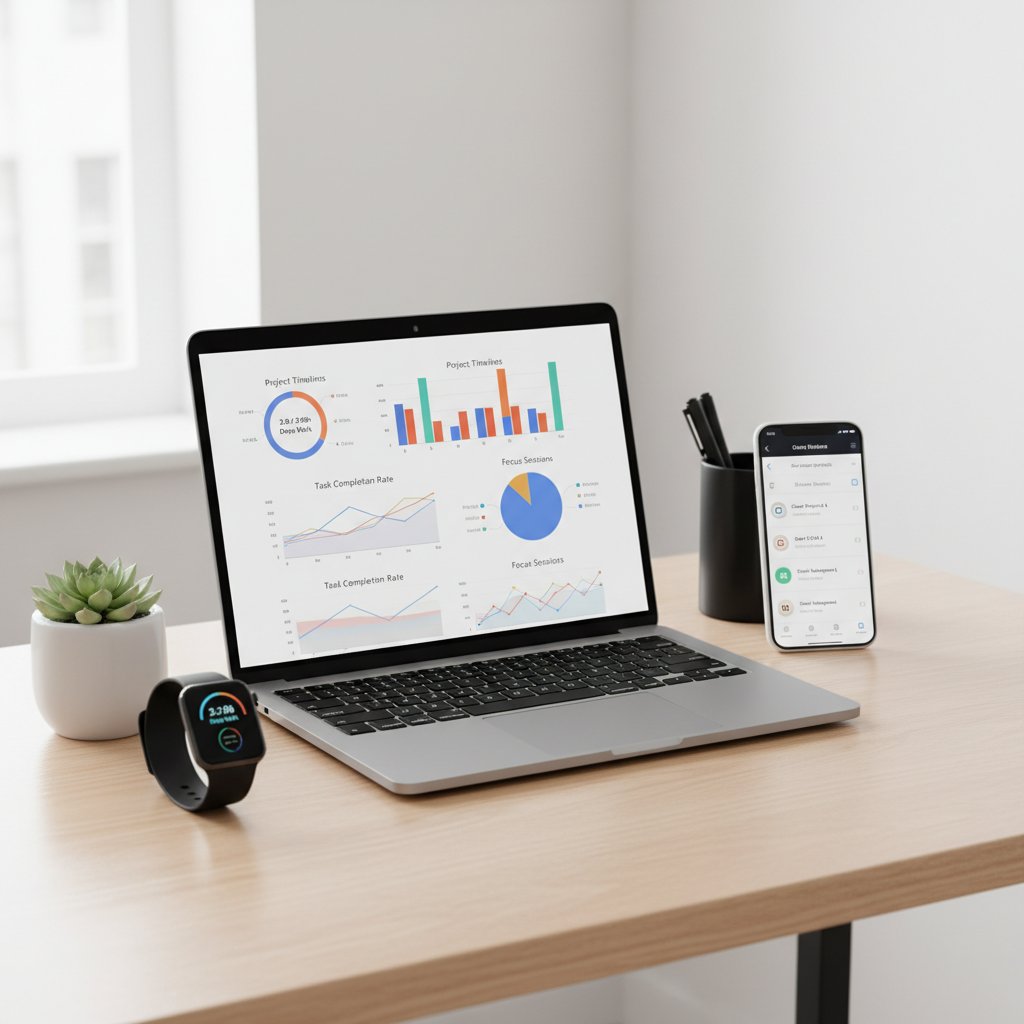
Integrating these metrics within a quantified self framework enables continuous, data-driven refinement of work habits. Using digital tools—such as time-tracking apps, task management software, and wearable devices—individuals collect objective data to identify patterns and correlations. For example, correlating focus intervals with task completion rates can reveal optimal working durations.
This approach supports iterative adjustments, such as scheduling high-concentration tasks during peak energy periods or minimizing distractions during critical intervals. Data visualization dashboards provide clear insights, empowering users to make informed decisions that enhance productivity sustainably.
Conclusion
Tracking daily productivity metrics offers a structured, evidence-based method to understand and improve personal performance. By adopting a quantified self mindset, individuals can move beyond anecdotal assessments to actionable insights, fostering more efficient work habits and better time management. The next step involves selecting appropriate tools to gather relevant data and establishing consistent tracking routines for ongoing optimization.