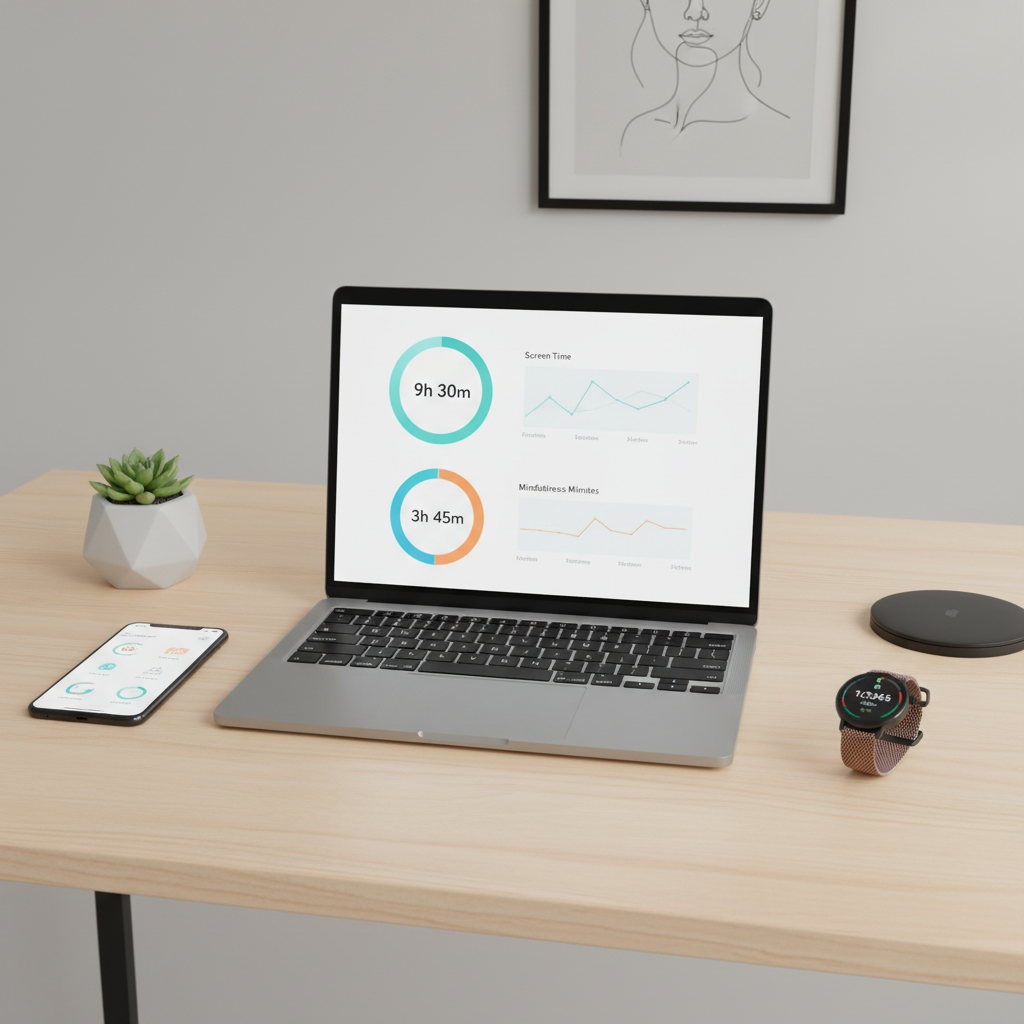
Tracking Digital Wellbeing: Metrics to Optimize Productive Habits
Introduction
In the current digital era, managing our interaction with technology is critical for maintaining productivity and mental clarity. Digital wellbeing has become a significant focus, as excessive or poorly managed digital usage can negatively impact work efficiency and personal habits. Tracking digital wellbeing using measurable data offers a structured way to optimize these interactions.
Context / Problem
Many individuals face challenges with digital distractions, such as frequent notifications, prolonged screen time, and unstructured breaks. These issues often lead to reduced concentration, increased stress, and inefficient time use. Without objective data, it is difficult to identify patterns or make informed adjustments to digital habits.
What Can Be Measured or Tracked
To understand and improve digital wellbeing, several key metrics can be tracked:
- Screen Time: Total hours spent on devices daily, segmented by app or usage category.
- App Usage Frequency: Number of times specific applications or websites are accessed.
- Notification Count and Response Time: Frequency of notifications received and how quickly they are addressed.
- Focus Sessions: Duration and frequency of uninterrupted work periods.
- Break Patterns: Timing and length of breaks away from screens.
- Sleep Impact: Correlation between device usage before bedtime and sleep quality metrics.
Quantified Self Perspective
From a quantified self standpoint, gathering these metrics allows individuals to establish a baseline for digital behavior and observe trends over time. By applying data analytics, users can identify which digital habits correlate with higher productivity and wellbeing. For example, analyzing app usage alongside productivity outputs can highlight distractions to minimize.
Data visualization tools and dashboards can consolidate these metrics into actionable insights, guiding personalized strategies such as limiting certain apps during work hours or scheduling regular screen breaks. Continuous tracking supports iterative refinements, fostering sustainable digital habits grounded in empirical evidence.
Conclusion
Measuring digital wellbeing through specific, data-driven metrics provides a practical framework to enhance productivity and maintain healthy technology use. By adopting a quantified self approach, individuals gain clarity on their digital behaviors, enabling targeted interventions that promote focus and reduce digital fatigue. The next step involves selecting appropriate tracking tools and consistently reviewing collected data to optimize digital habits effectively.