Introduction
In today's digital era, technology use is deeply integrated into both professional and personal spheres. Monitoring digital wellbeing is increasingly relevant as excessive or unbalanced screen time can negatively impact productivity and overall health. This article explores how tracking digital wellbeing metrics can provide actionable insights to optimize daily habits and performance.
Context / Problem
The ubiquity of digital devices often leads to fragmented attention and reduced focus. Overuse or poorly managed interactions with smartphones, computers, and apps can cause cognitive fatigue and diminish work efficiency. Despite this, many users lack clear data or frameworks to understand their digital habits objectively, making it difficult to identify patterns that hinder productivity.
What Can Be Measured or Tracked
Key metrics relevant to digital wellbeing and productivity tracking include:
- Screen Time: Total duration of device use per day segmented by app or activity.
- App Usage Frequency: Number of opens and time spent on specific applications.
- Notification Counts: Volume and timing of notifications received.
- Focus Sessions: Periods of uninterrupted work tracked via focus or productivity apps.
- Break Intervals: Frequency and length of breaks away from screens.
- Sleep Impact: Correlation between evening screen exposure and sleep quality.
These indicators help quantify digital exposure and its temporal distribution throughout the day.
Quantified Self Perspective
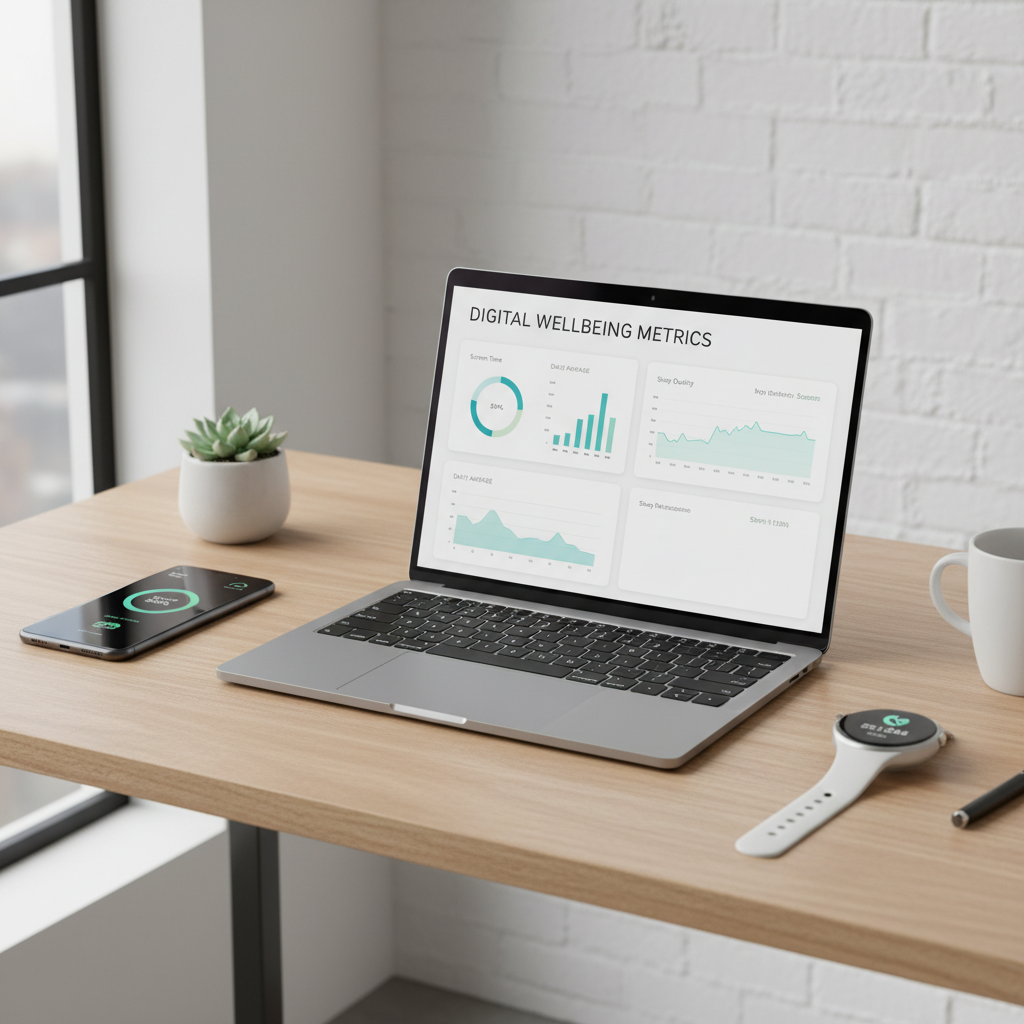
Applying a Quantified Self methodology involves systematically collecting and analyzing personal digital wellbeing data to recognize behavioral patterns and their effects on productivity. By utilizing tracking tools such as device-native digital wellbeing dashboards or third-party apps, individuals can create personalized metrics dashboards.
Data-driven insights enable:
- Identification of peak distraction times and triggers.
- Adjustment of notification settings and app usage limits.
- Structuring of work sessions with optimal focus and break intervals.
- Monitoring of behavioral changes over time to assess intervention effectiveness.
This analytical approach fosters intentional technology use aligned with productivity goals and mental clarity.
Conclusion
Tracking digital wellbeing metrics offers a structured, evidence-based method to understand and optimize interactions with technology. By leveraging measurable data, individuals can make informed decisions that enhance productivity while maintaining balanced digital habits. The next step is to select reliable tracking tools and begin consistent data collection to build actionable insights tailored to one’s unique context.