Introduction
Mental health is increasingly recognized as a critical component of overall wellbeing. In today's fast-paced environment, understanding and managing mental health through objective data can empower individuals to make informed decisions. Quantified Self practices offer a structured approach to track mental health metrics systematically.
Context / Problem
Mental health issues often manifest with subjective symptoms that can be difficult to measure or communicate effectively. Traditional assessments rely heavily on self-reporting, which may be inconsistent or influenced by bias. Without objective data, managing mental health proactively remains a challenge.
What Can Be Measured or Tracked
Several measurable indicators provide insights into mental health status:
- Mood Tracking: Using daily mood ratings or mood journals to quantify emotional states over time.
- Stress Levels: Measuring physiological markers like heart rate variability (HRV) or galvanic skin response (GSR) alongside subjective stress scales.
- Sleep Quality: Tracking sleep duration, efficiency, and disturbances via wearable devices or sleep apps.
- Cognitive Performance: Monitoring reaction time, memory tests, or attention tasks through digital tools.
- Activity Levels: Quantifying physical activity as it correlates with mental health.
- Social Interaction: Logging communication frequency and quality as social connectedness impacts mental wellbeing.
Quantified Self Perspective
Adopting a Quantified Self approach involves systematically collecting these data points to create a personalized mental health profile. This data-driven strategy enables:
- Identification of patterns and triggers impacting mental health.
- Objective evaluation of interventions such as mindfulness, therapy, or medication.
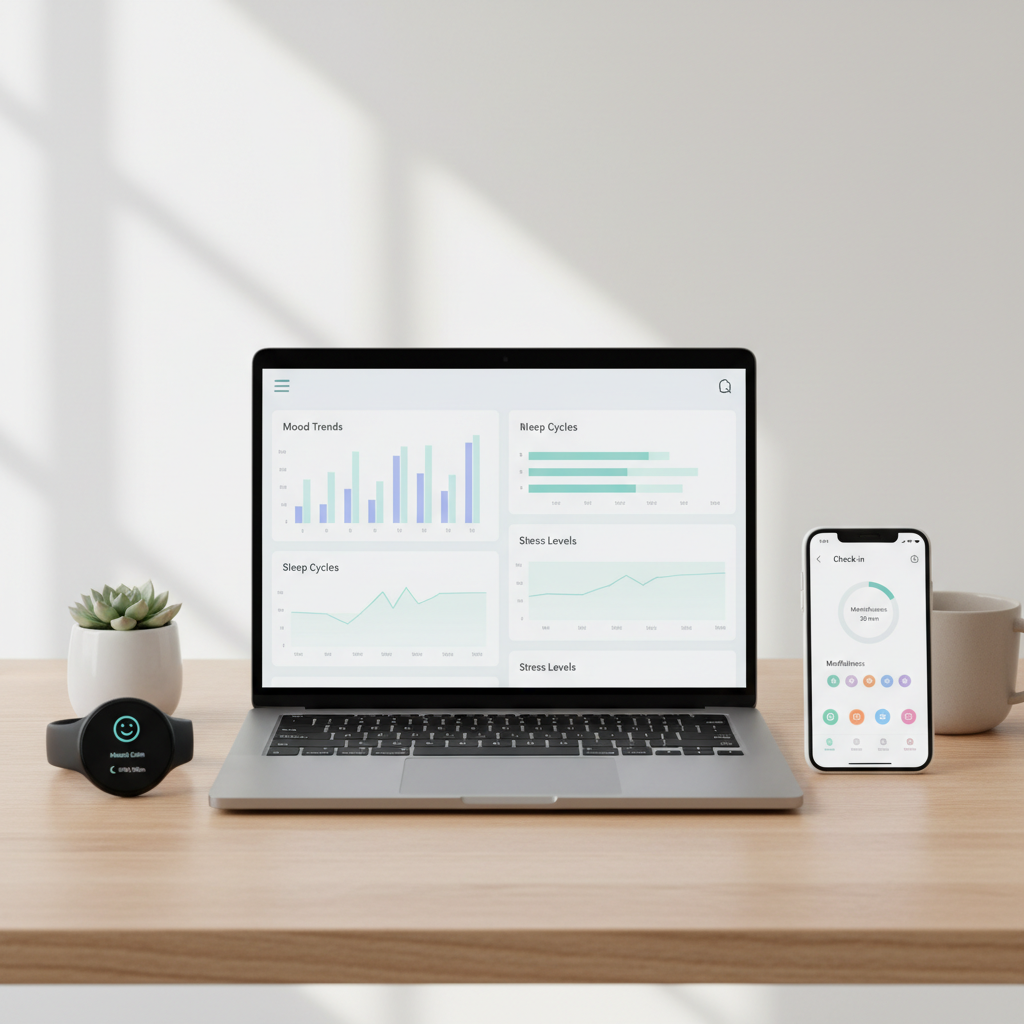
- Enhanced self-awareness through visualized trends and dashboards.
- Data-supported communication with healthcare professionals.
Integrating multiple metrics provides a holistic view, avoiding reliance on isolated data points. Consistent tracking improves data reliability and actionable insights.
Conclusion
Mental health tracking through Quantified Self methodologies offers a pragmatic, evidence-based framework to understand and manage emotional wellbeing. By focusing on measurable indicators like mood, stress, sleep, and cognitive function, individuals can gain clarity and control over their mental health journey. The next step involves selecting appropriate tools and establishing a routine data collection process to leverage these insights effectively.