Introduction
In the current landscape where mental health is increasingly recognized as integral to overall well-being, the ability to monitor and understand emotional states through measurable data is essential. Self-tracking mental health metrics offers a data-driven pathway to better comprehend patterns and triggers affecting emotional well-being.
Context / Problem
Mental health conditions such as anxiety, depression, and stress are often subjective and difficult to quantify. Traditional assessments rely on self-reporting and clinical evaluations, which can be infrequent and imprecise. This creates a gap in continuous understanding and proactive management of mental health in daily life.
What can be measured or tracked
Several indicators and proxies can be monitored to provide insight into mental health:
- Mood tracking: Daily self-reported emotional states using scales or journals.
- Sleep patterns: Quality and quantity of sleep measured via wearable devices.
- Heart rate variability (HRV): Physiological measure linked to stress response.
- Activity levels: Physical activity as a factor influencing mental health.
- Social interactions: Frequency and quality of social engagement.
- Cognitive performance: Tracking focus, memory, and reaction times.
- Stress levels: Self-reported stress or physiological markers such as galvanic skin response.
Quantified Self perspective
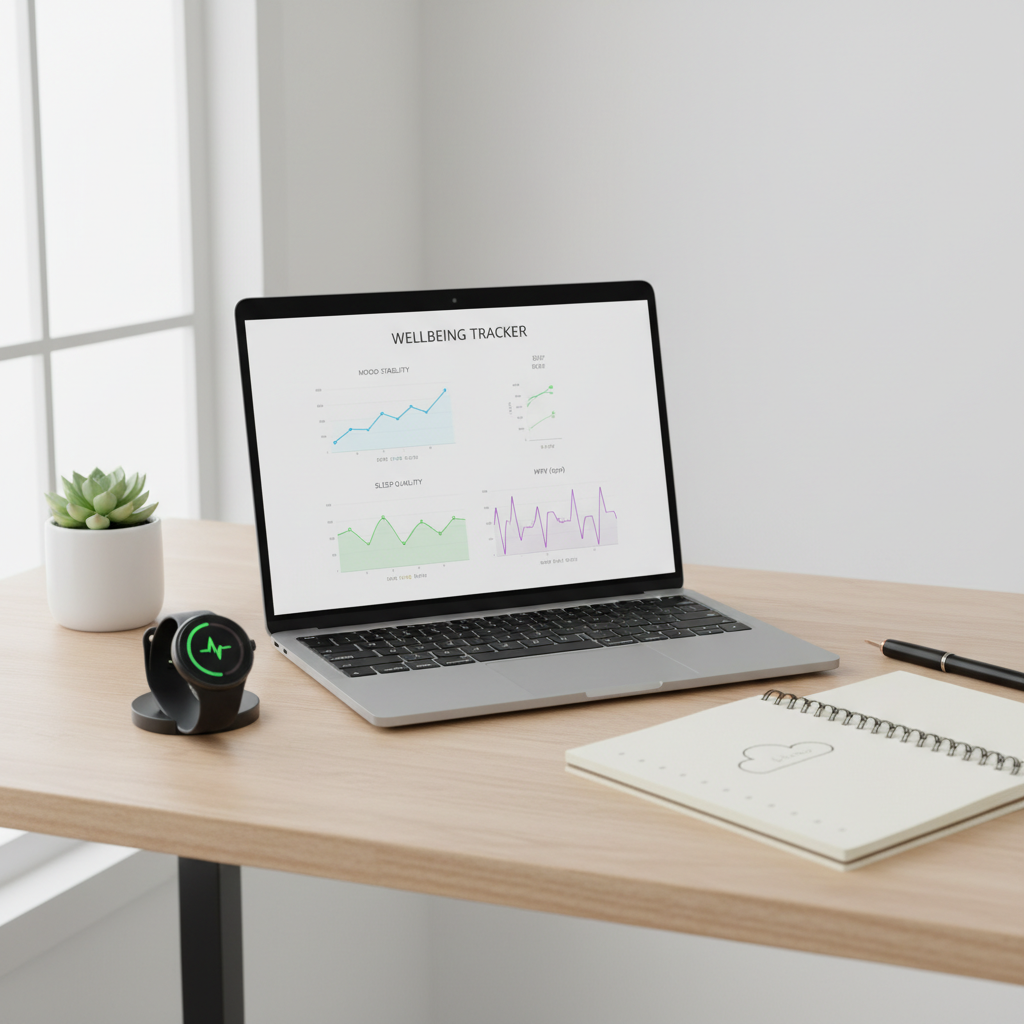
Integrating these metrics into a coherent self-tracking system allows individuals to create personalized dashboards that reveal correlations between lifestyle factors and mental health states. The Quantified Self approach emphasizes objective data collection alongside subjective reflection, facilitating informed decisions and behavioral adjustments. For example, recognizing how reduced sleep correlates with negative mood can prompt targeted interventions.
Tracking over time empowers users to identify patterns, triggers, and effective coping strategies, enhancing self-awareness and resilience. Moreover, data-driven insights can improve communication with healthcare providers by providing continuous, detailed records rather than episodic snapshots.
Conclusion
Mental health self-tracking offers a pragmatic, data-centered method to understand and manage emotional well-being. By measuring relevant metrics consistently, individuals gain actionable insights that support healthier habits and improved productivity. The next step involves selecting appropriate tools and establishing regular tracking routines to harness the full potential of this approach.