Introduction
In today's fast-paced work environments, understanding how to optimize productivity is crucial. Tracking productivity metrics offers a clear way to identify patterns, bottlenecks, and opportunities for improvement, enabling individuals and organizations to make informed decisions based on measurable data.
Context / Problem
Many professionals struggle to maintain consistent productivity due to distractions, lack of focus, or inefficient task management. Traditional methods relying on subjective assessments or intuition often fail to provide actionable insights. Without concrete data, it is difficult to pinpoint the exact causes of productivity fluctuations or to systematically improve work habits.
What Can Be Measured or Tracked
Several objective metrics can be monitored to evaluate productivity effectively:
- Time Spent on Tasks: Duration dedicated to specific activities helps identify time allocation and potential inefficiencies.
- Task Completion Rates: Tracking the number of tasks completed within a given timeframe indicates workflow effectiveness.
- Focus and Distraction Intervals: Measuring periods of sustained focus versus interruptions reveals concentration patterns.
- Break Frequency and Duration: Monitoring breaks can inform optimal rest cycles to maintain productivity.
- Output Quality: Although more subjective, incorporating feedback or review scores can complement quantitative metrics.
- Use of Productivity Tools: Data from apps or software usage logs can indicate engagement and task management efficiency.
Quantified Self Perspective
From a Quantified Self standpoint, these productivity metrics become part of a broader self-tracking regimen that emphasizes data-driven self-awareness. By collecting and analyzing personal productivity data regularly, individuals can identify trends and correlations—for example, how different times of day or environmental factors influence performance.
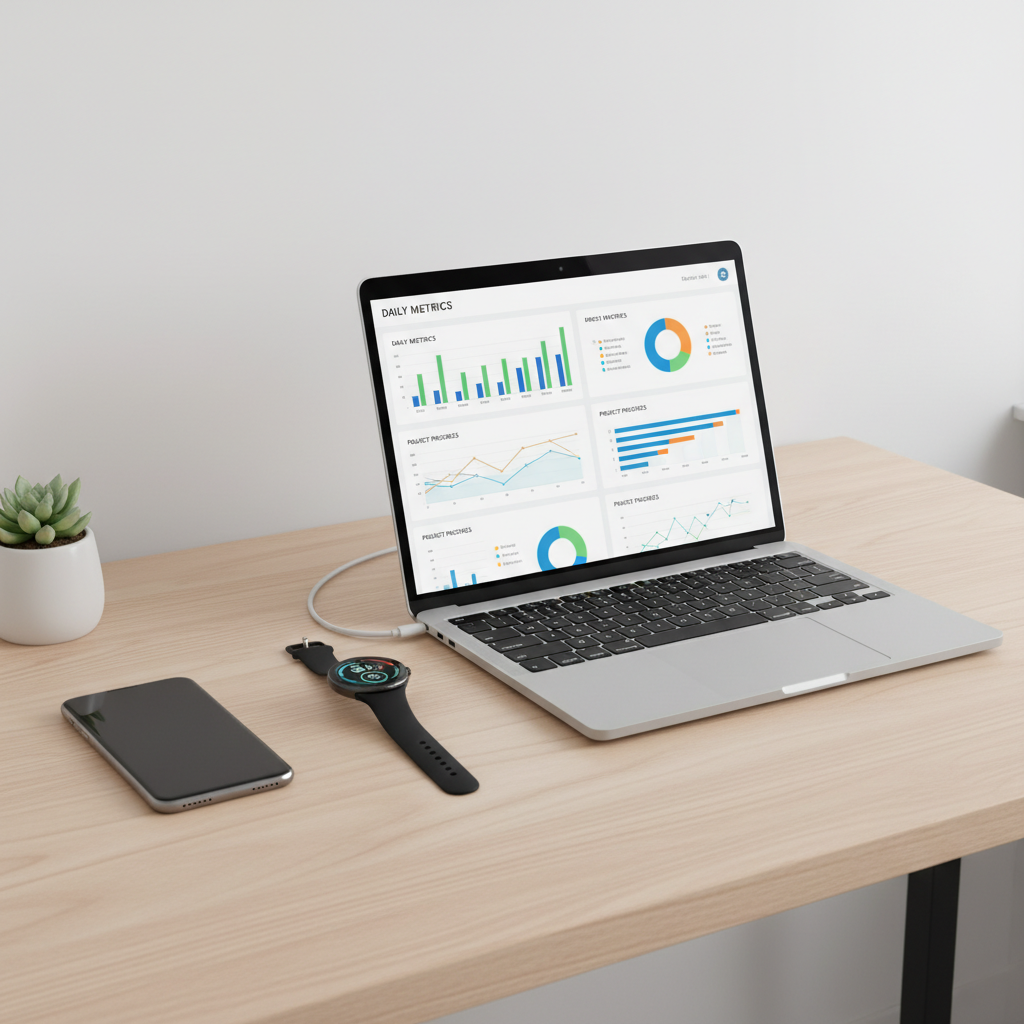
Self-tracking tools and dashboards enable visualization of these metrics, facilitating hypothesis testing and iterative adjustments to work routines. This structured approach reduces reliance on guesswork and supports continuous, evidence-based improvement.
Conclusion
Tracking productivity metrics offers a practical, measurable path to enhancing work performance. By adopting a Quantified Self mindset and leveraging data collection tools, individuals can gain valuable insights into their work habits, identify areas for improvement, and implement targeted strategies to optimize productivity sustainably. The next step involves selecting appropriate tracking tools and establishing consistent data collection practices to build a reliable productivity dashboard.