Introduction
In an era where efficiency and personal performance are increasingly prioritized, understanding productivity through measurable data has become essential. Tracking productivity metrics offers a structured way to analyze habits, optimize workflows, and make informed decisions about time management.
Context / Problem
Many individuals and professionals struggle with identifying why productivity fluctuates throughout the day or week. Traditional self-assessment methods are often subjective and inconsistent, leading to ineffective strategies for improvement. Without quantifiable data, it is difficult to pinpoint bottlenecks or distractions affecting output.
What Can Be Measured or Tracked
Productivity can be assessed through a variety of metrics and indicators, including:
- Time spent on tasks: Tracking actual hours dedicated versus planned.
- Task completion rate: Measuring the number of tasks completed relative to those planned.
- Focus duration: Monitoring uninterrupted periods of concentration.
- Distraction frequency: Logging interruptions or context switches.
- Output quality: Using objective criteria to rate the quality or impact of work.
- Energy levels: Correlating subjective energy or alertness with productivity patterns.
- Break patterns: Analyzing the timing and duration of breaks to optimize recovery.
Quantified Self Perspective
The Quantified Self approach emphasizes the collection of personal data to gain insights and enact behavioral changes grounded in evidence. By systematically tracking productivity metrics, individuals can:
- Identify peak performance periods and align demanding tasks accordingly.
- Detect recurring distractions and devise strategies to minimize them.
- Adjust workload distribution based on energy and focus data.
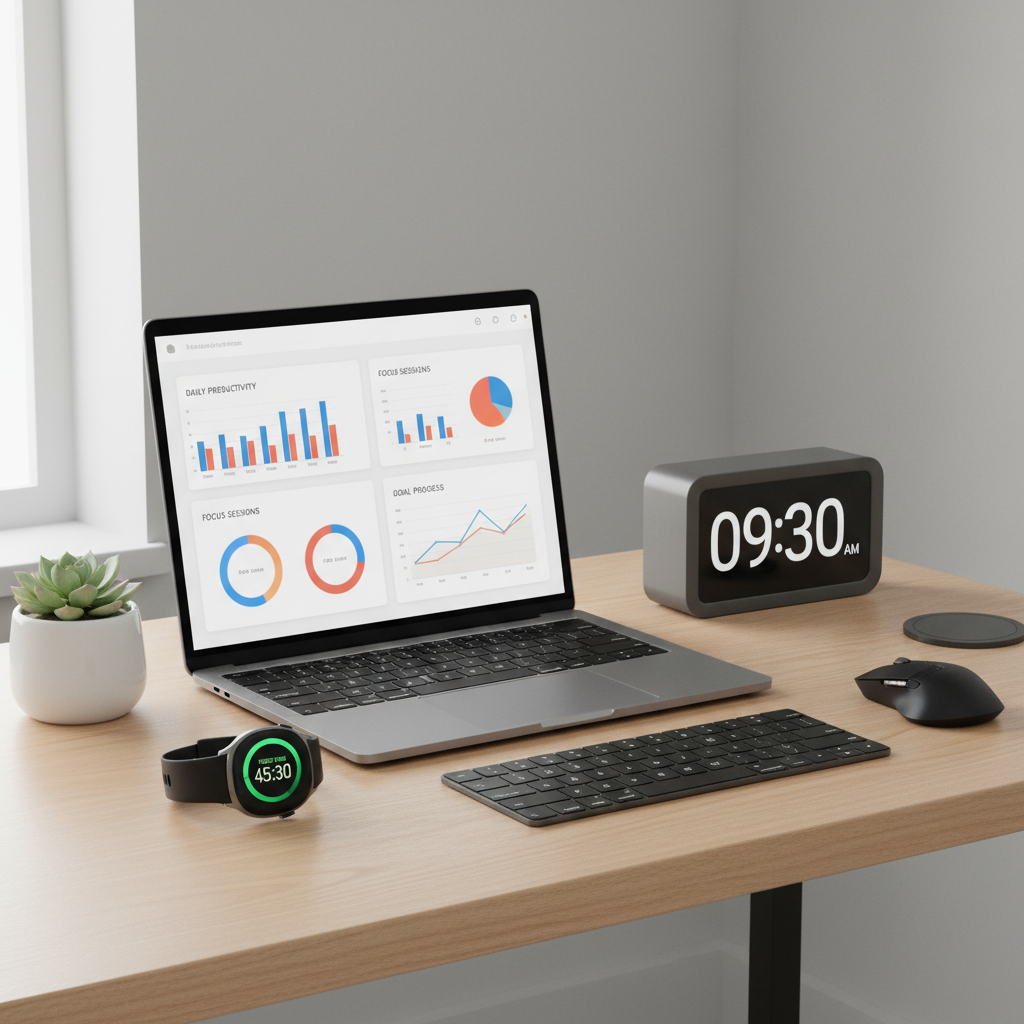
- Use dashboards and visualization tools to observe trends and progress over time.
- Make data-driven decisions on workflow adjustments rather than relying on intuition.
This method promotes a disciplined, analytical mindset toward personal productivity rather than subjective evaluations.
Conclusion
Tracking productivity metrics through a Quantified Self lens provides a clear, data-driven pathway to enhance performance. By measuring relevant indicators, individuals gain actionable insights to optimize time management, reduce inefficiencies, and improve overall output quality. The next step is to select appropriate tools for systematic tracking and commit to a regular review cycle to drive continuous improvement.