Introduction
In today’s data-driven environment, understanding and enhancing personal productivity through measurable metrics is increasingly important. Productivity is not only about working harder but also about working smarter by leveraging data insights to optimize time and effort.
Context / Problem
Many individuals struggle to identify where their productivity gains or losses occur due to a lack of concrete data. Without tracking relevant indicators, productivity improvements often rely on guesswork or subjective perceptions, which can lead to inefficient habits and unmeasured outcomes.
What Can Be Measured or Tracked
Several key productivity metrics can be tracked to gain actionable insights:
- Time Allocation: Duration spent on various tasks or projects.
- Task Completion Rate: Number of tasks completed versus planned.
- Focus Duration: Length of uninterrupted work sessions.
- Distraction Frequency: Incidents of interruptions or multitasking.
- Energy Levels: Subjective or biometric data correlating with productivity peaks.
- Output Quality: Measurable results or feedback quality from completed work.
Quantified Self Perspective
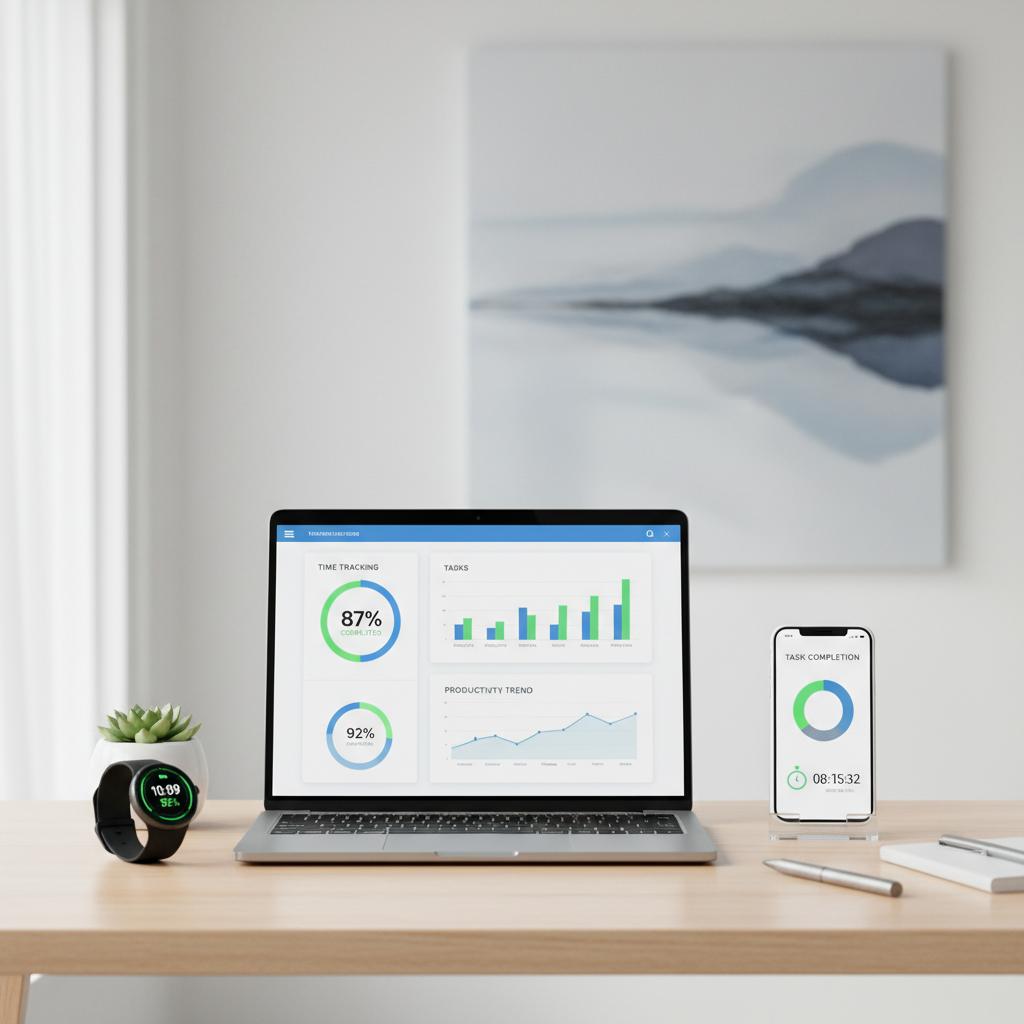
From a Quantified Self standpoint, systematically tracking these metrics allows individuals to identify patterns, inefficiencies, and optimal work conditions. Using digital tools and dashboards, data can be collected passively or actively, enabling continuous feedback loops for behavior adjustment. Analyzing trends over time supports objective decision-making about how to structure workflows, break times, and task prioritization.
Conclusion
Measuring productivity through defined metrics provides a factual basis to improve personal performance. By adopting a data-driven self-tracking approach, individuals can replace assumptions with insights, optimize their daily routines, and achieve more consistent, sustainable productivity improvements.