Introduction
In today’s data-driven world, understanding productivity through measurable metrics is essential for continuous self-improvement. With increasing demands on time and resources, quantifying productivity enables individuals to identify patterns, optimize workflows, and enhance overall efficiency.
Context / Problem
Many professionals and individuals struggle to objectively assess their productivity. Traditional methods often rely on subjective impressions or vague goals, which can lead to inconsistent performance assessments and missed opportunities for improvement. Without clear metrics, it becomes challenging to pinpoint bottlenecks or validate the effectiveness of productivity strategies.
What Can Be Measured or Tracked
Several metrics and indicators provide insight into productivity levels:
- Time Spent on Tasks: Tracking the duration dedicated to specific activities helps identify time allocation and inefficiencies.
- Task Completion Rate: The ratio of completed tasks versus planned tasks offers a clear measure of output.
- Focus Duration: Measuring uninterrupted work periods can reveal attention spans and concentration quality.
- Interruptions Count: Logging distractions helps quantify their impact on workflow.
- Goal Progress: Monitoring milestones relative to objectives clarifies advancement and deadlines.
- Energy Levels: Correlating subjective energy or alertness scores with productivity can identify optimal work periods.
Quantified Self Perspective
From a Quantified Self standpoint, these metrics are collected systematically using tools such as digital calendars, time-tracking apps, and wearable devices. Analyzing this data over time allows individuals to establish baselines, detect trends, and experiment with behavioral changes.
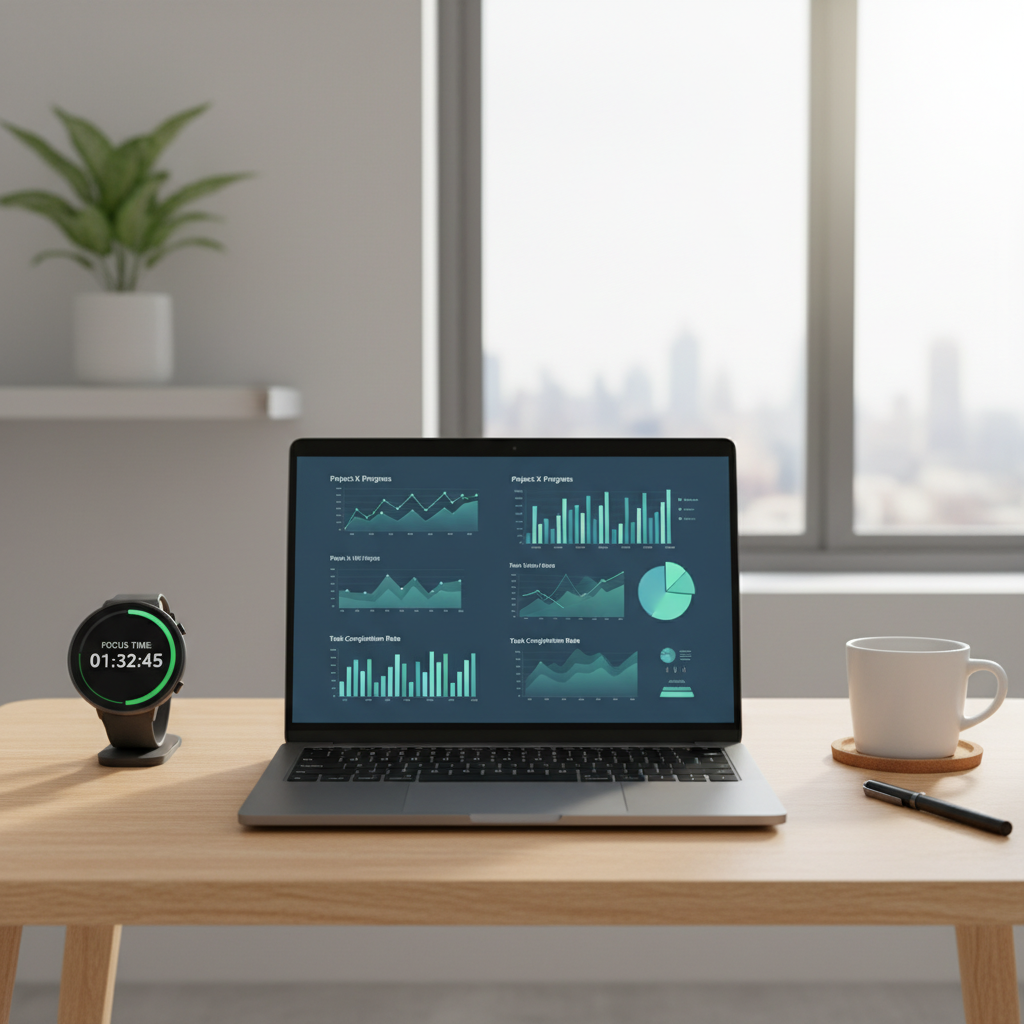
Dashboards and visualizations transform raw data into actionable insights, enabling more informed decisions about task priorities and work habits. For example, recognizing that productivity dips after a certain number of focused hours can encourage scheduled breaks.
Moreover, integrating multiple data points—such as task completion rates with energy levels—can uncover deeper patterns that single metrics alone might miss. This data-driven approach supports a personalized productivity optimization strategy grounded in empirical evidence rather than intuition.
Conclusion
Tracking productivity metrics is a foundational practice for anyone seeking to improve efficiency through data. By systematically measuring time usage, task completion, focus, and related indicators, individuals gain a clear understanding of their work behaviors. The Quantified Self methodology offers tools and frameworks to leverage this data effectively, fostering continuous, evidence-based productivity enhancements.