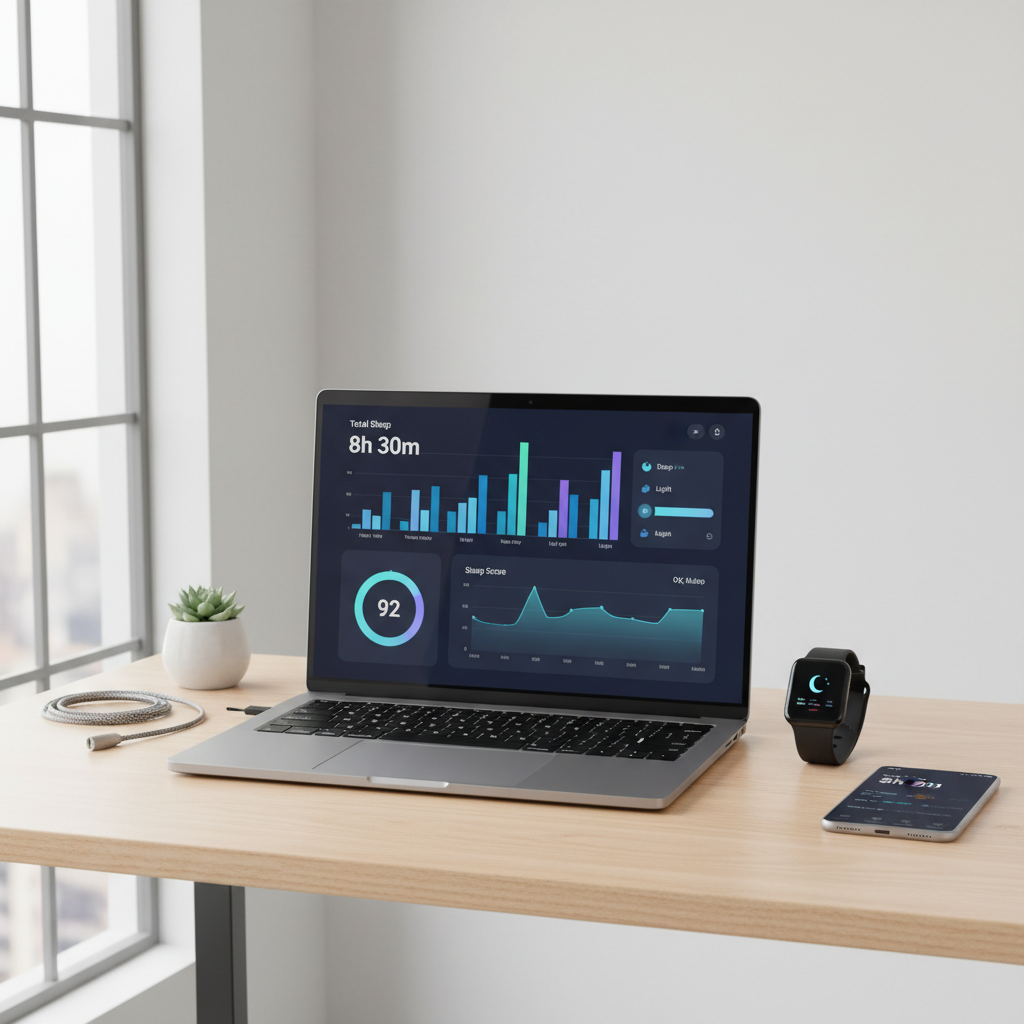
Introduction
Sleep is a fundamental component of human health and productivity. In recent years, the proliferation of sleep tracking technologies has enabled individuals to measure and analyze their sleep patterns with unprecedented precision. Understanding these metrics is essential for optimizing daily performance and long-term well-being in a data-driven manner.
Context / Problem
Despite its importance, many individuals struggle to maintain consistent, restorative sleep due to lifestyle factors, stress, or underlying health issues. Traditional subjective assessments of sleep quality often lack precision and actionable insights. Consequently, poor sleep can impair cognitive function, emotional regulation, and physical health, ultimately reducing productivity and quality of life.
What Can Be Measured or Tracked
Sleep tracking devices and applications typically monitor a range of metrics including:
- Total Sleep Time (TST): The overall duration of sleep per night.
- Sleep Stages: Proportions of light, deep, and REM sleep phases.
- Sleep Latency: Time taken to fall asleep.
- Wake After Sleep Onset (WASO): Periods of wakefulness during the night.
- Sleep Efficiency: Ratio of time asleep to time spent in bed.
- Heart Rate Variability (HRV): Indicator of autonomic nervous system activity during sleep.
- Respiratory Rate: Breathing patterns that may reveal sleep disturbances.
These data points provide a comprehensive view of sleep quality, duration, and physiological responses.
Quantified Self Perspective
From a Quantified Self standpoint, tracking sleep metrics allows individuals to establish baseline patterns and identify deviations that may impact performance and health. By correlating sleep data with productivity indicators—such as cognitive sharpness, mood, or physical activity—users can make informed adjustments to behaviors or environments.
Data-driven interventions might include modifying bedtime routines, adjusting exposure to light, optimizing bedroom conditions, or consulting healthcare professionals if irregular patterns persist. Over time, consistent tracking fosters a feedback loop where measurable improvements in sleep quality directly translate into enhanced daily functioning.
Conclusion
Sleep tracking offers a valuable, objective lens on a critical dimension of health and productivity. By leveraging precise metrics and integrating them into a holistic self-monitoring system, individuals can optimize their sleep habits with tangible, data-supported actions. For anyone committed to a quantified approach to well-being, sleep tracking is an essential component for informed decision-making and sustained performance enhancement.